Minimalist Wedding Response Qr Code: Modern RSVP Simplicity
In the realm of wedding stationery, the shift toward digital integration is no longer a novelty—it's a practical necessity. The Minimalist Wedding Response Qr Code template represents a sophisticated bridge between traditional etiquette and modern convenience. This design asset isn't just a piece of paper; it's a functional tool that streamlines the guest response process while maintaining a high-end aesthetic. For couples and designers looking to eliminate the friction of manual data entry, this template offers a clean, professional solution.
Visual Character and Design Philosophy
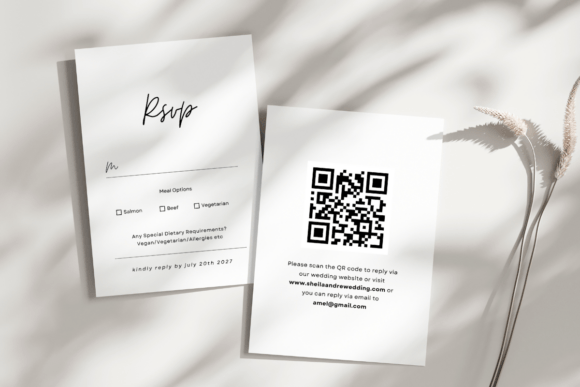
At its core, the visual language of this template relies on restraint. It avoids the ornate flourishes often associated with traditional wedding stationery, favoring instead a layout where whitespace is as intentional as the typography. The design personality is calm, organized, and confident. By placing the QR code at the center of the visual hierarchy, the layout communicates that efficiency is a priority without sacrificing elegance. The typography used in the preview typically features a balanced pairing—perhaps a delicate serif for headings to maintain that bridal elegance, paired with a clean sans-serif for instructional text to ensure maximum legibility.
The overall appeal lies in its versatility. Because the aesthetic is so understated, it acts as a "chameleon" asset. It can seamlessly blend into a rustic barn wedding theme or a sleek, urban gala. The minimalist approach ensures that the card does not compete with the invitation suite but rather complements it, serving a singular, clear purpose: getting the guest to RSVP with a simple scan.
Practical Applications Beyond the Wedding
While the primary use case is obvious, the Minimalist Wedding Response Qr Code design structure has applications that extend into broader branding and marketing strategies. For small business owners and event planners, this layout serves as an excellent case study in "Call to Action" (CTA) design.
Consider a corporate networking event or a boutique workshop. The principles used in this wedding template—clear hierarchy, ample spacing, and a prominent digital trigger—can be repurposed for event badges, table signage, or direct mail flyers. The visual structure supports the psychology of conversion: it guides the eye from the context (the event details) directly to the action (the scan). For content creators and bloggers hosting meet-and-greets, a similar layout can be printed on postcards to direct followers to a specific landing page or portfolio.
The Power of Editable Assets
One of the most significant advantages of this digital item is the level of control it offers. In professional design, "editable" often means limited changes to color or text. However, this template provides full customization capabilities. This is crucial for maintaining brand consistency.
- Typography Control: You have the freedom to adjust font sizes and styles. If your wedding suite uses a specific script font, you can swap out the placeholder text to match, ensuring your stationery suite feels cohesive.
- Color Grading: Minimalist designs are sensitive to color. Being able to adjust the hex codes allows you to match the card exactly to your specific shade of "dusty rose" or "sage green," rather than settling for a generic preset.
- Layout Flexibility: The ability to move text boxes means you can adjust the negative space to suit your specific wording length. If your RSVP details are wordier than average, you can reorganize the layout to prevent visual clutter.
Technical Execution and Print Quality
A design is only as good as its final physical manifestation. The recommendation to use heavy-weight, high-quality white card stock is not just marketing advice—it is a technical requirement for minimalist design. Thin paper can cause ink to bleed, which muddies the sharp lines required for a modern aesthetic. Furthermore, high-contrast QR codes require crisp edges to scan correctly; a high-quality print ensures the code remains scannable.
When preparing files for print, whether at home or through a professional service, attention to detail matters. The template is designed at 3.5x5", a standard size that fits easily into envelopes and acrylic stands. However, when downloading your final design, ensure you select the highest resolution possible (PDF Print Quality is recommended over standard web JPGs) to preserve the integrity of the typography and the code's data density.
Integrating the QR Code into Your Brand Identity
Using a Minimalist Wedding Response Qr Code is more than a logistical choice; it is a brand statement. It signals to your guests that you value their time and appreciate modern solutions. From a design perspective, the QR code itself can be styled within Canva to some extent—adjusting the corner dots or adding a small logo in the center can help it feel less like a utility and more like a design element.
For designers and entrepreneurs, this template highlights the importance of user experience (UX) in print design. Just as a website needs a clear navigation path, a print piece needs a clear instruction set. The success of this card lies in its lack of ambiguity. There is no confusion about what to do; the design inherently teaches the user the behavior: Scan here.
Ultimately, this digital asset provides a framework for professional communication. It combines the tactile satisfaction of a printed card with the efficiency of digital data collection, proving that in modern design, function and form are not mutually exclusive.